
A Complete Guide to Growing Your Online Income and Business
Introduction
Affiliate marketing is one of the most effective digital marketing strategies for generating online revenue. It enables businesses to increase sales while allowing individuals, bloggers, influencers, and content creators to earn commissions by promoting products or services.
As more businesses shift to digital platforms, affiliate marketing has become a performance-driven model where advertisers pay only for actual results, making it a cost-effective solution for brands and a profitable opportunity for affiliates.
In this guide, you’ll learn what affiliate marketing is, how it works, its benefits, challenges, best practices, and how to build a successful affiliate marketing strategy.

What is Affiliate Marketing?
Affiliate marketing is a marketing model where an individual or company (the affiliate) promotes another company’s products or services through a unique affiliate link. When someone purchases through that link, the affiliate earns a commission.
It is a win-win strategy because:
- Businesses gain more customers.
- Affiliates earn passive income.
- Customers discover trusted products through recommendations.
Affiliate marketing has become one of the fastest-growing digital marketing channels because it is based on measurable performance rather than traditional advertising.
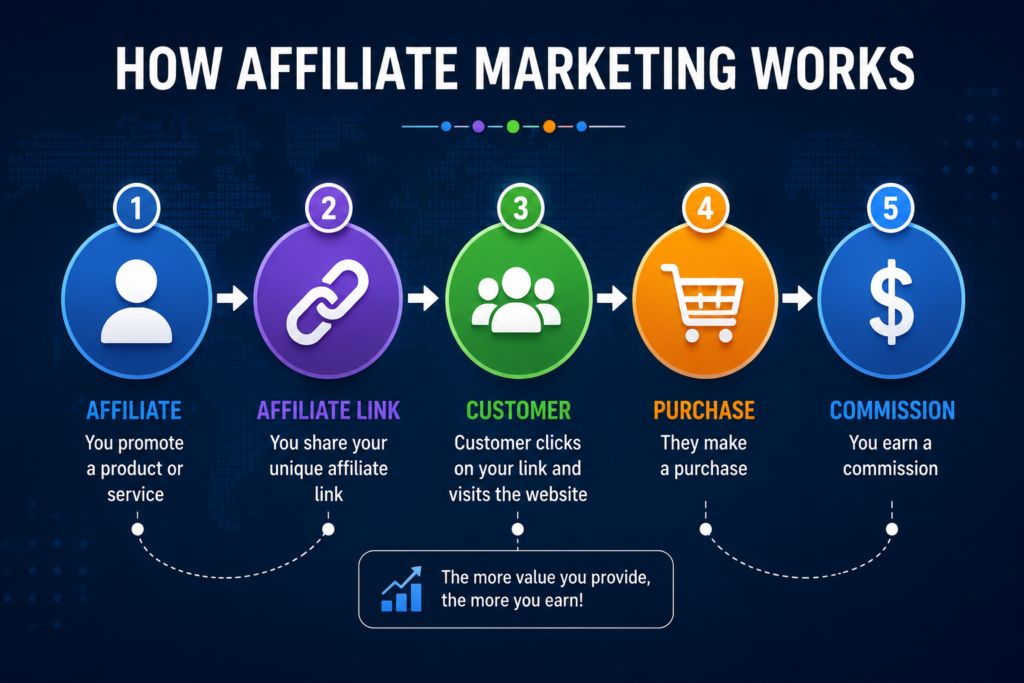
How Affiliate Marketing Works
Affiliate marketing follows a simple process:
Step 1: Join an Affiliate Program
An affiliate signs up for a company’s affiliate program.
Step 2: Get a Unique Tracking Link
The company provides a personalized affiliate link that tracks visitors and purchases.
Step 3: Promote Products
The affiliate promotes products through:
- Blog articles
- YouTube videos
- Social media
- Email marketing
- Websites
- Product reviews
Step 4: Customer Makes a Purchase
When a visitor clicks the affiliate link and buys a product, the sale is tracked.
Step 5: Earn Commission
The affiliate receives a commission based on the company’s payout structure.
Types of Affiliate Marketing
1. Unattached Affiliate Marketing
The affiliate promotes products without personal experience.
Example:
Running paid advertisements for products.
2. Related Affiliate Marketing
The affiliate promotes products related to their niche.
Example:
A fitness blogger recommending protein supplements.
3. Involved Affiliate Marketing
The affiliate personally uses and recommends products.
Example:
A digital marketer recommending SEO tools they regularly use.
This is considered the most trustworthy and effective type of affiliate marketing.
Benefits of Affiliate Marketing
Low Startup Cost
Unlike traditional businesses, affiliate marketing requires minimal investment.
Passive Income
Once quality content ranks in search engines or gains traffic, commissions can continue for months or years.
No Product Creation
Affiliates don’t need to manufacture products or manage inventory.
Flexible Working
Affiliate marketers can work from anywhere with an internet connection.
Performance-Based Revenue
Income grows as website traffic and conversions increase.
Unlimited Growth Potential
Successful affiliates can promote multiple products across different industries.

Best Channels for Affiliate Marketing
Blogging
Writing detailed product reviews and comparison articles remains one of the highest-converting methods.
YouTube
Video tutorials and reviews help audiences understand products before purchasing.
Social Media
Platforms like Instagram, Facebook, LinkedIn, and X can drive significant affiliate traffic.
Email Marketing
Sending valuable recommendations to subscribers often results in higher conversion rates.
SEO
Ranking content on Google provides long-term, consistent traffic.
Popular Affiliate Marketing Niches
Choosing the right niche is essential for long-term success.
Popular niches include:
- Digital Marketing
- Technology
- Health & Fitness
- Finance
- Education
- Web Hosting
- Software & SaaS
- Fashion
- Beauty
- Travel
- Home Improvement
- Online Courses
Essential Skills for Affiliate Marketing Success
Successful affiliate marketers develop several key skills:
- Content Writing
- Search Engine Optimization (SEO)
- Social Media Marketing
- Email Marketing
- Keyword Research
- Analytics & Data Tracking
- Conversion Rate Optimization
- Audience Building
These skills help increase traffic and maximize affiliate commissions.
Common Affiliate Marketing Strategies
Product Reviews
Honest and detailed product reviews build trust and encourage purchases.
Comparison Articles
Comparing similar products helps readers make informed buying decisions.
Example:
- Product A vs Product B
- Best SEO Tools
- Top Email Marketing Platforms
Tutorials
Teaching users how to use products naturally introduces affiliate recommendations.
Resource Pages
Creating a “Recommended Tools” page allows visitors to discover multiple affiliate products in one place.
Email Funnels
Email sequences nurture potential customers and increase conversion rates over time.
Common Affiliate Marketing Mistakes
Avoid these common mistakes:
- Promoting too many unrelated products
- Ignoring SEO optimization
- Writing low-quality content
- Not understanding your audience
- Overusing promotional language
- Failing to disclose affiliate partnerships
- Neglecting performance analytics
Building trust is more valuable than chasing quick commissions.

Tips for Successful Affiliate Marketing
- Choose a niche you genuinely understand.
- Focus on solving audience problems.
- Create original, high-quality content.
- Optimize articles for SEO.
- Build an email list.
- Recommend only trusted products.
- Monitor analytics regularly.
- Update content frequently.
- Test different promotional strategies.
- Stay informed about industry trends.
Consistency and value are key to long-term affiliate success.
Future of Affiliate Marketing
Affiliate marketing continues to evolve with advancements in AI, influencer marketing, video content, and social commerce. Consumers increasingly rely on trusted recommendations, making authentic content more valuable than ever.
Businesses are investing more in affiliate partnerships because they offer measurable returns on investment. As technology improves, affiliates who focus on quality content, transparency, and user experience will remain competitive.
Conclusion
Affiliate marketing is a powerful strategy for businesses looking to expand their reach and for individuals seeking to build an online income. By creating valuable content, choosing reliable products, and focusing on audience trust, affiliates can achieve sustainable growth over time.
Whether you’re a beginner starting your first blog or an established business exploring performance-based marketing, affiliate marketing offers significant opportunities for long-term success. With patience, continuous learning, and a well-planned strategy, it can become one of the most rewarding digital marketing channels available today.